Barcelona, Spain — 5 March 2026
A new international initiative aimed at accelerating the transition towards regenerative agriculture and more resilient food systems has officially launched in Barcelona. RAIN — the Regenerative Agriculture Innovation Network — brings together farmers, corporates, innovators, researchers, investors and public institutions to coordinate action and scale regenerative solutions across the global agrifood system.
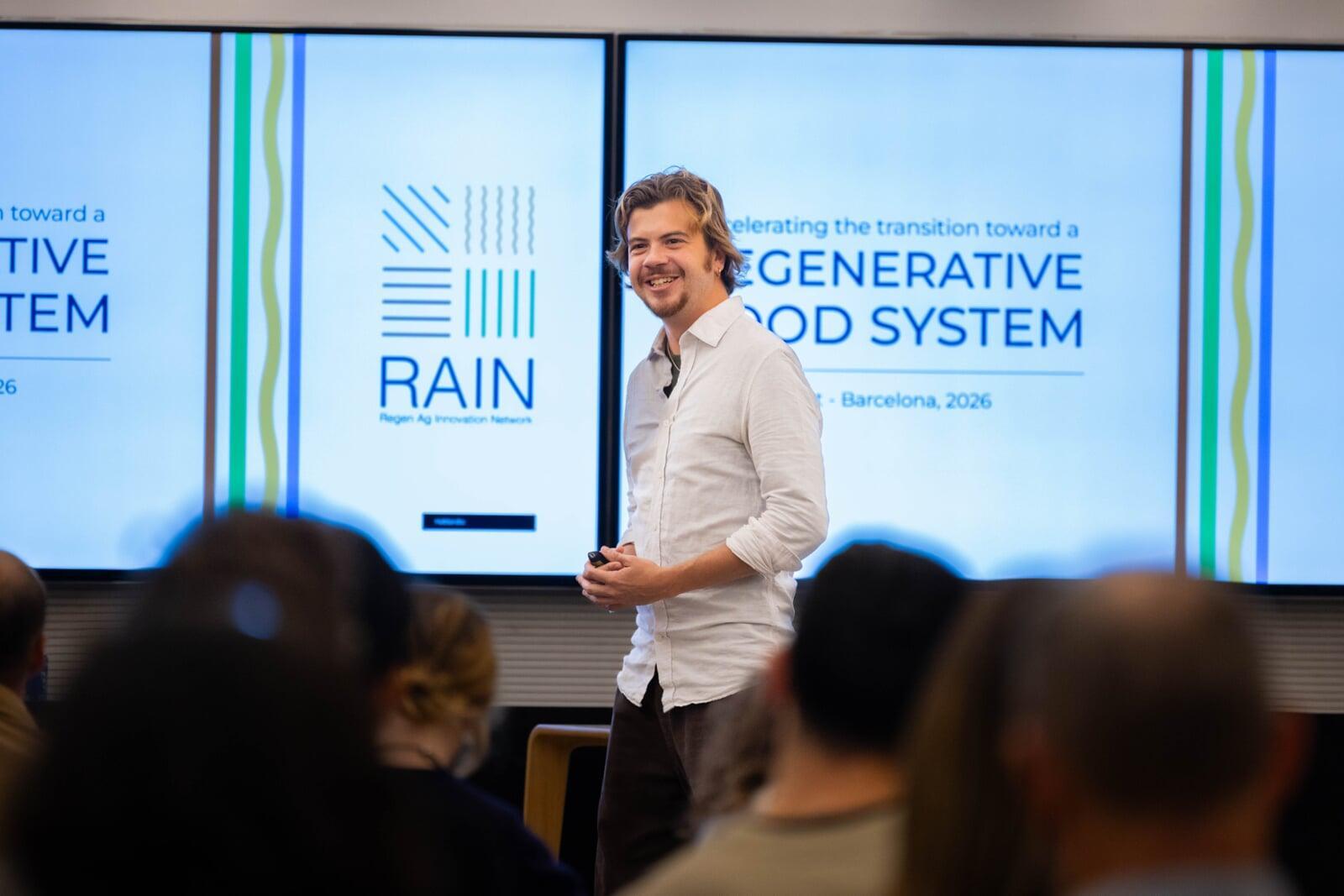
The launch event took place on Thursday 5 March at EADA Business School, gathering leaders from across agriculture, innovation, academia and finance to explore how collaboration across sectors can unlock the full potential of regenerative agriculture.
The event was hosted by Arthur Folkmann, Director of RAIN and Sustainable Innovation Professor at EADA Business School, who opened the gathering by highlighting the urgent need for systemic collaboration to address the interconnected crises facing today’s food systems.
A Turning Point for Agriculture
Agriculture represents one of the most powerful leverage points for systemic transformation. While it once enabled humanity to move from survival to stability, the systems that supported that growth are now under increasing strain.
Climate instability, soil degradation, fragile supply chains and economic uncertainty are deeply interconnected challenges that are reshaping the future of food and agriculture. Today, nearly 60% of the world’s soil is degraded, agriculture accounts for around 70% of global freshwater use, and one in three companies reports financial losses linked to climate instability.
These pressures highlight the need for a new relationship with land, production systems and value creation — one that restores ecosystems while strengthening rural economies and food security.
RAIN was created in response to this moment.
Rather than another isolated sustainability initiative, RAIN is designed as a systemic ecosystem that connects actors across the entire agrifood value chain. The network aims to accelerate adoption of regenerative practices by aligning stakeholders around shared challenges and enabling collaborative solutions that can scale across regions.
As regenerative development thinker Daniel Christian Wahl noted:
“We are living in a moment where the future depends less on having the right answers, and more on learning to ask the right questions together.”
From Regenerative Vision to Real‑World Adoption
Despite growing momentum around regenerative agriculture, many initiatives remain fragmented. Pilot projects, sustainability commitments and research programmes often operate in isolation, slowing the transition from experimentation to large‑scale adoption.
RAIN seeks to address this gap.
The network functions as a multi‑stakeholder platform for regenerative innovation, enabling collaboration between farmers, cooperatives, corporations, researchers, innovators and policymakers. By coordinating efforts across sectors, the initiative aims to transform promising ideas into practical solutions that can be implemented across landscapes and supply chains.
RAIN will support this transition through several core activities, including:
Regenerative open innovation programmes connecting industry challenges with emerging solutions
Living Labs where regenerative practices can be tested and developed in real‑world conditions
Leadership and capability programmes to build regenerative thinking across organisations
Venture‑building initiatives designed to support scalable regenerative business models
Together, these efforts aim to move beyond isolated pilots towards systemic transformation.

Catalunya as the First Activation
Catalunya has been chosen as the first regional activation of RAIN due to its strong agricultural identity, diverse farming systems and vibrant innovation ecosystem.
The region’s deep cultural connection to land, combined with a strong network of cooperatives and research institutions, makes it an ideal environment to test collaborative approaches to regenerative agriculture that can later be adapted and replicated elsewhere.
RAIN’s approach follows a “glocal” model — combining local experimentation with globally shared learning. Insights developed in one region can inform and accelerate transition pathways in others.
Building a Regenerative Alliance
The launch event featured contributions from leading voices working at the intersection of regenerative agriculture, circular economy and systemic innovation.
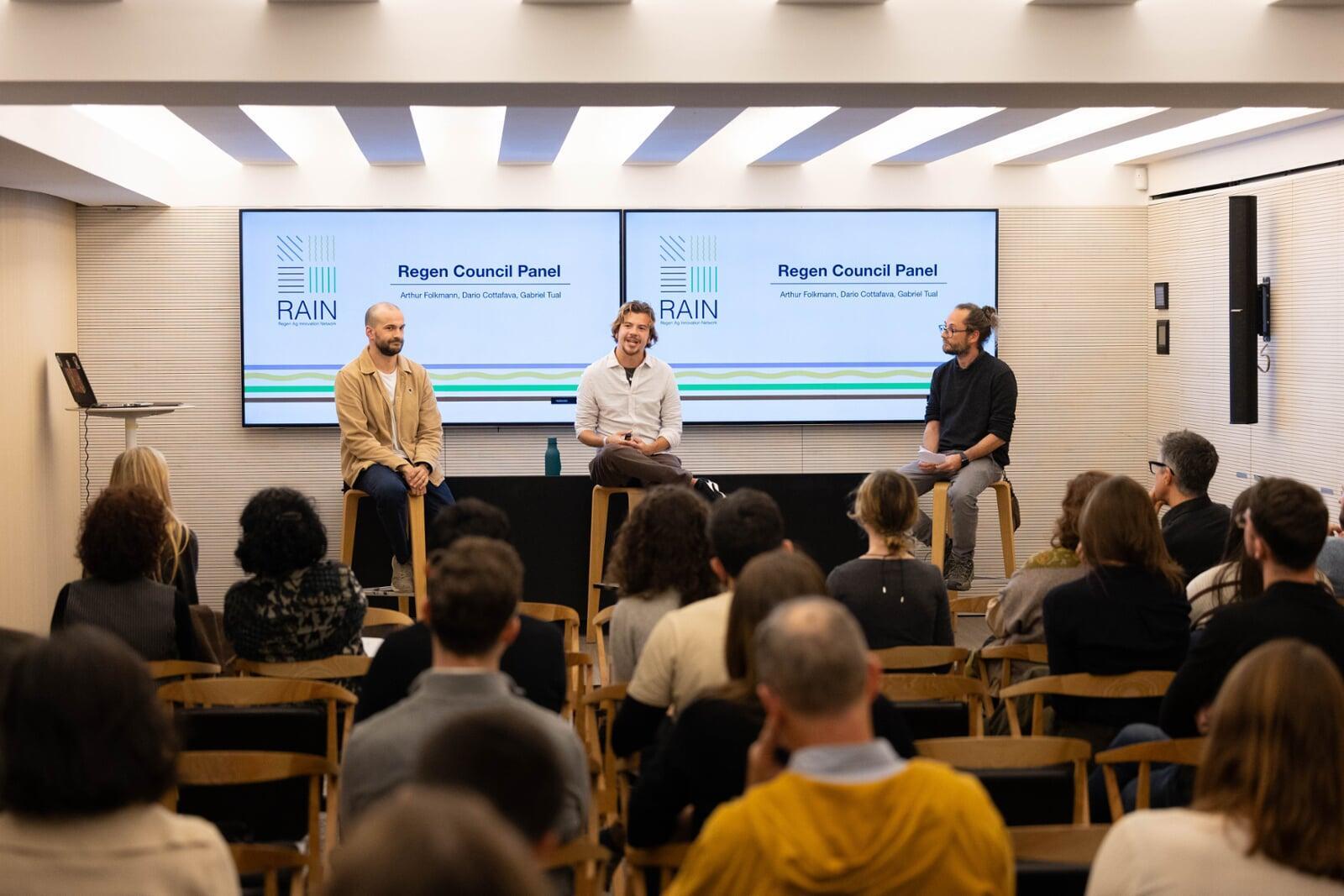
Speakers included Gabriel Tual, regenerative engineer at Carbonapp and founder of Growing Tomorrow, who explored the practical barriers farmers face when transitioning to regenerative systems. He highlighted the importance of strengthening access to knowledge, financial support and viable market pathways in order to accelerate adoption at scale.
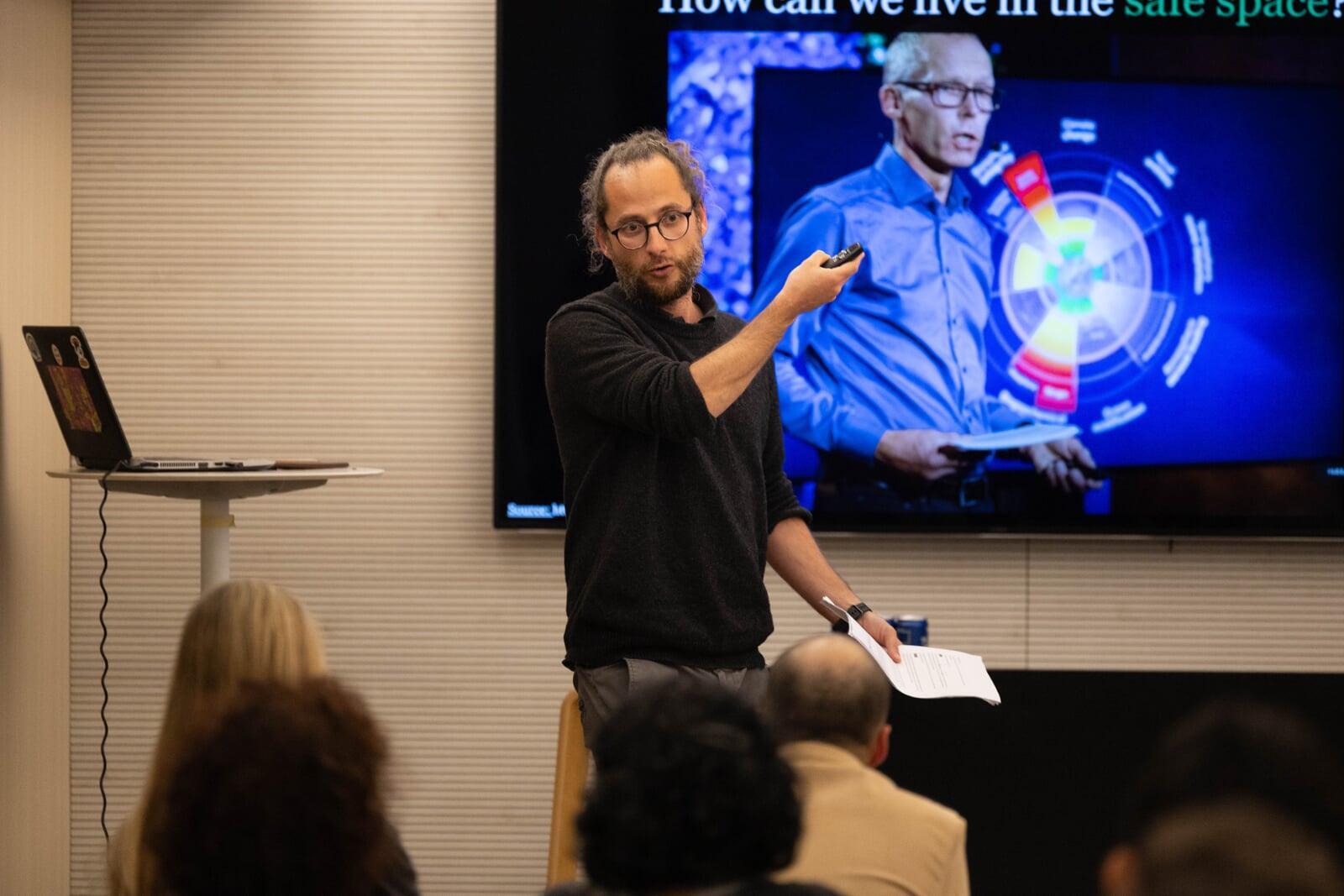
Dario Cottafava, Senior Researcher at the Universitat Autònoma de Barcelona and Lecturer at EADA Business School, examined how circular and bio‑based innovation can support regenerative systems while remaining aligned with planetary boundaries.
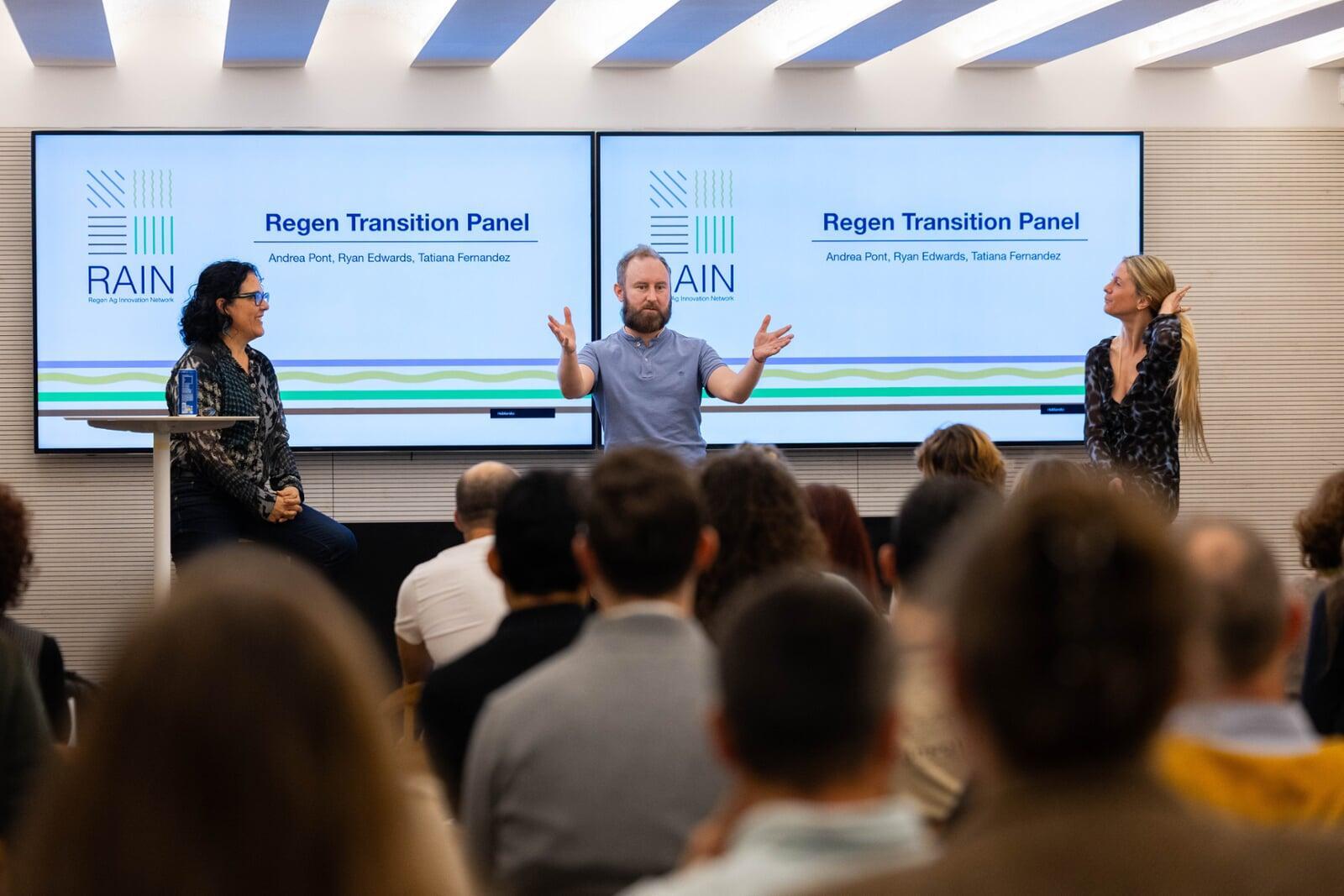
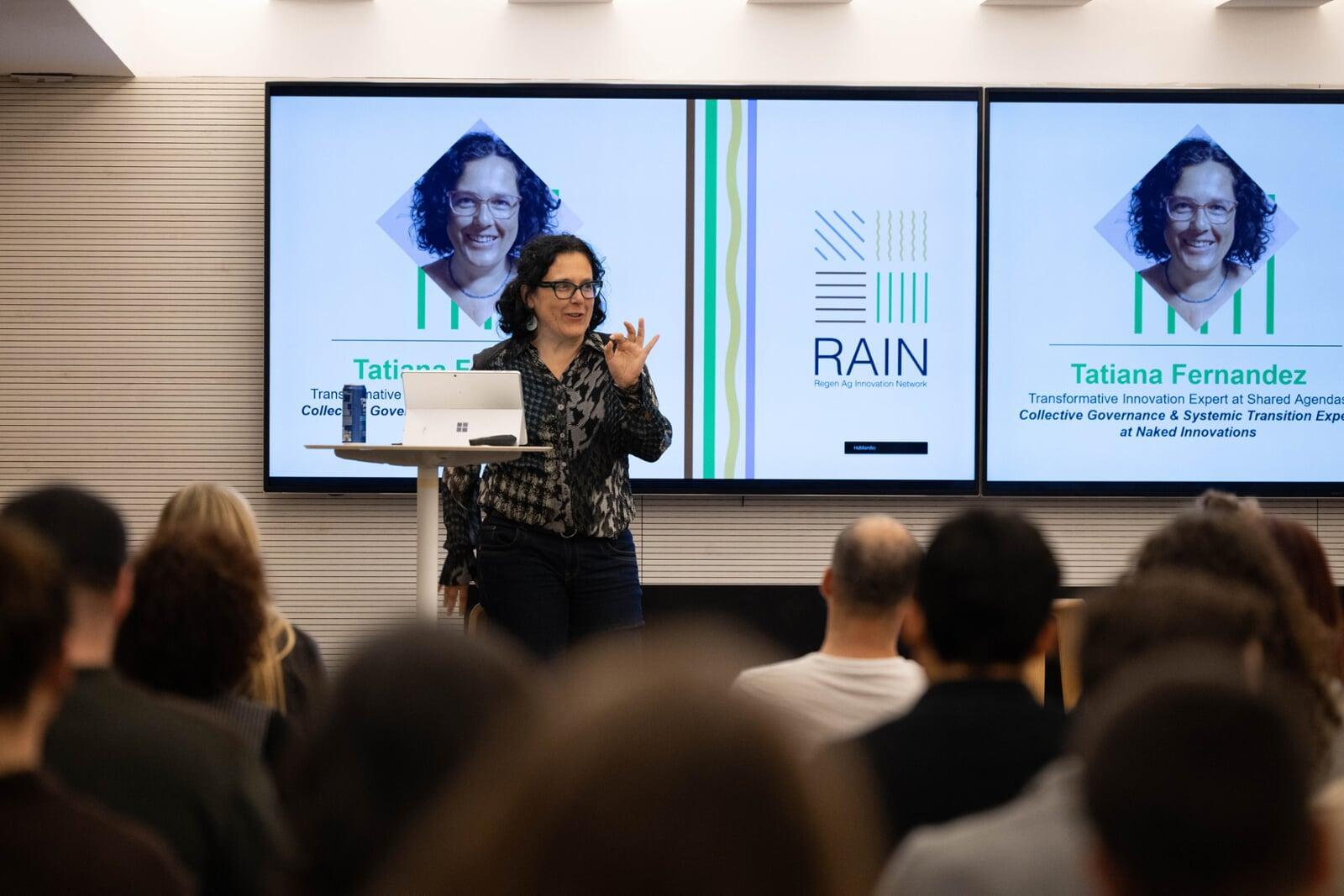
TatianaFernández, Global Institutional Lead at Naked Innovations and expert in transformative innovation and collective governance, presented the role of Shared Agendas in enabling coordinated action between institutions, businesses and communities working towards systemic change.
The event also featured AndreaPont, Europe International Programmes Lead at the PepsiCo Foundation, who shared perspectives on the role of philanthropic and corporate investment in accelerating regenerative transitions.
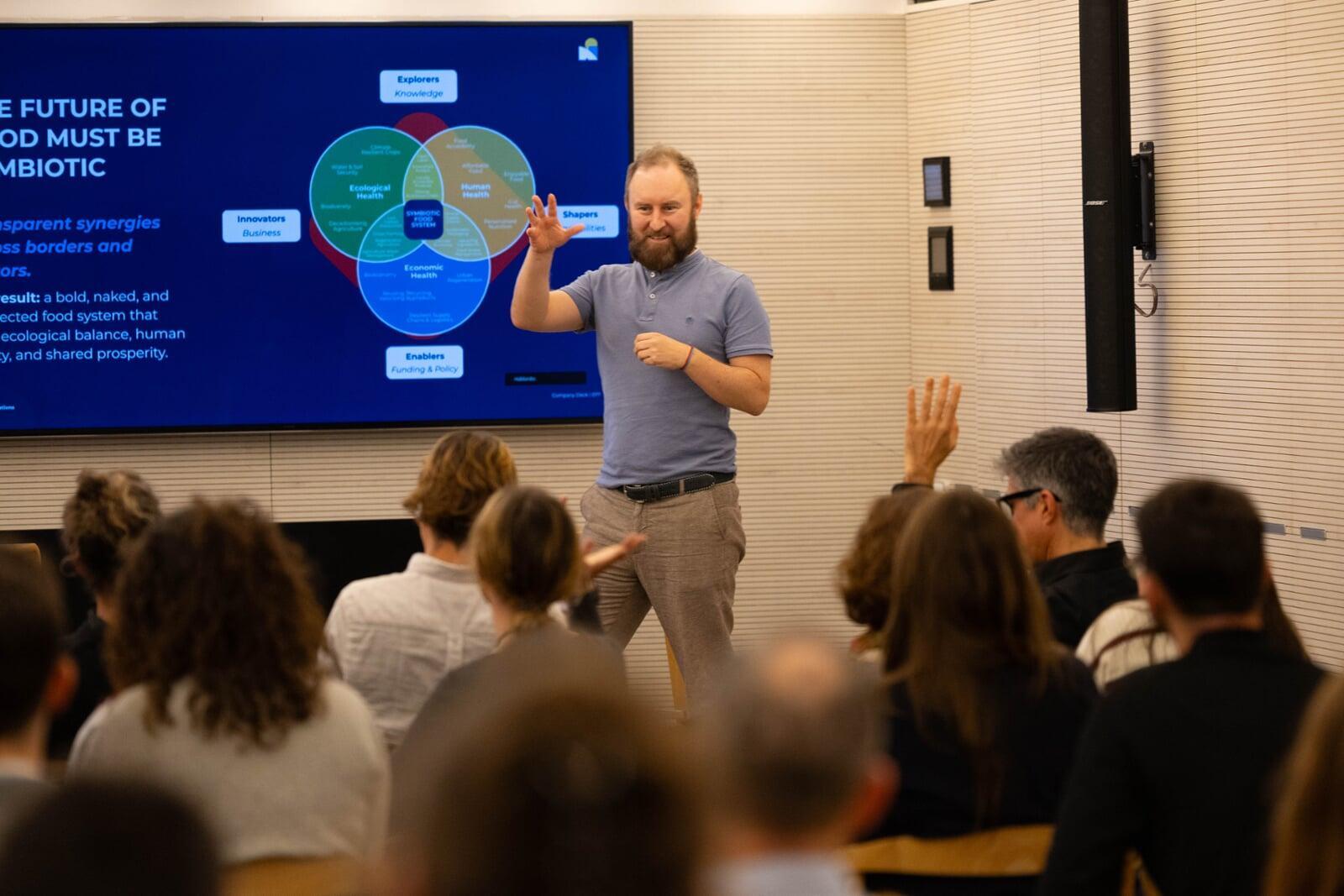
Closing the session, Ryan Edwards, CEO of Naked Innovations and ecosystem venture builder, emphasised the importance of collaboration across borders and sectors in shaping the future of food.
“The future of food must be symbiotic,” he noted. “Transparent synergies across sectors and geographies can create a connected food system that strengthens ecological balance, human wellbeing and shared prosperity.”
A Call to Collaborate
RAIN is designed as an open alliance for organisations committed to accelerating regenerative transformation across the agrifood system.
By bringing together farmers, corporations, innovators and institutions, the network aims to lower the barriers to adoption, strengthen regenerative value chains and make regenerative agriculture both economically viable and environmentally restorative.
Organisations are invited to join RAIN as Purposeful Strategic Partners, contributing challenges, expertise and collaboration to help shape the next generation of regenerative food systems.
As the network grows, its ambition is clear: to turn regenerative principles into coordinated action — and to ensure that no organisation has to navigate this transition alone.
Collaborate. Regenerate. Shape the transition.